Instrumented CQB Shoothouse

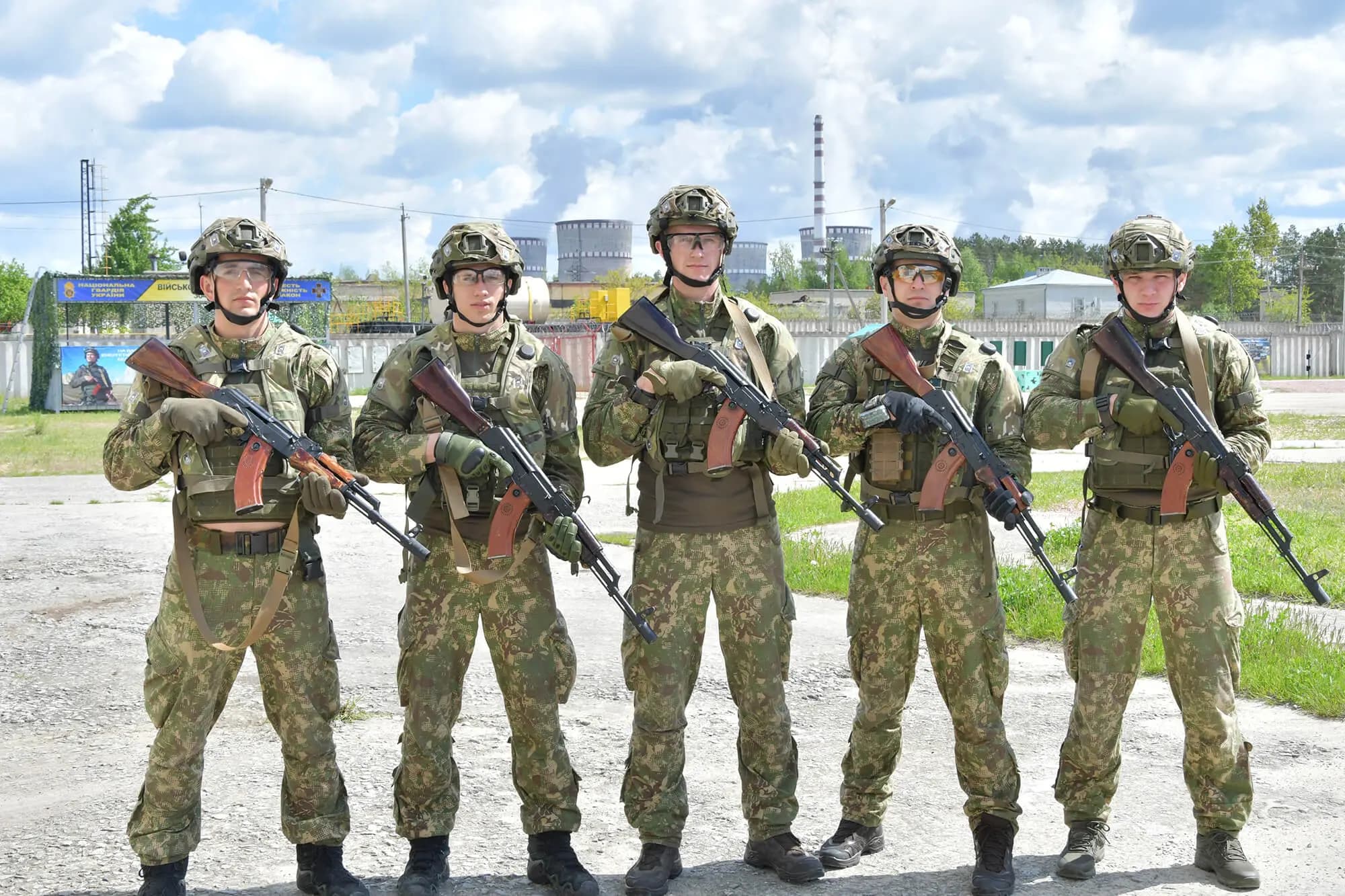
Instrumented CQB Shoothouse is an innovative software-hardware complex for comprehensive tactical training of CQB.
The system enables realistic building clearance and defense scenarios, group interaction, and operations in conditions close to real combat, with full analytics and instructor control.
Problem the Product Solves
Modern units operating in urban environments require training in realistic, dynamic conditions, but traditional ranges are limited to basic scenarios that struggle to replicate full urban combat, account for diverse threats, and objectively evaluate fighter actions.
Often, there's no unified standard across all personnel, and analytics remain at the level of subjective impressions—lacking precise metrics for time, routes, hits, unit interaction, and stress response.
Instrumented CQB Shoothouse transforms these limitations into opportunities:
Make urban training maximally realistic yet fully controlled
Unite all key training roles (assault teams, medics, commanders) in one environment
Record fighter actions in stressful situations for analysis that's data-driven and digital, not intuitive
Who It's For
A complete training environment for special forces and infantry operating in urban combat.
Instrumented CQB Shoothouse users:
Assault groups
Medics
Unit commanders
Special forces and infantry in urban combat training
Ecosystem
The SKIFTECH ShootHouse ecosystem integrates into existing ranges or operates as an autonomous site (with building and optional outdoor zone). Fully compatible with all SKIFTECH modules , or standalone—with dedicated software for scenarios, fighter tracking, and analytics.

How It Works
The instructor sets up the scenario in software.
Each fighter equips an individual kit—
system logs hits, updates fighter status.
Unit completes full cycle:
approach from outer zone, building assault, room clearance, retreat or evacuation.
Sensors track
door openings, target hits; video cameras and positioning systems monitor every fighter.
Post-training:
Instructor gets video footage, event logs, psychophysiological data—for group efficiency assessment, tactic adjustments, and personalized recommendations to fighters/commanders.
Role Assignment
Instrumented CQB Shoothouse assigns roles for realistic scenarios : some assault the building, others defend it—training team coordination, advance tactics, countermeasures, and overall preparation effectiveness.

Instrumented CQB Shoothouse Capabilities
Realistic Special Ops Scenarios
Full training cycle: from building entry to operation completion. Fighters operate in urban combat dynamics closest to reality.
Training Against Diverse Threats
Practice against shooters, mines/explosives, and real-world risks.
Stress Response Modeling
The system captures psychophysiological metrics to analyze fighter reactions under pressure—and build resilience.
Full Unit Control
Video surveillance and positioning give instructors real-time visibility of every group step.
Deep Post-Training Analytics
Collects complete stats for objective insights and training improvements.

Instrumented CQB Shoothouse Components

01
Central Control Station
02
Main Training Complex
03
Stress Scenario System
04
Internal Systems
05
Electronic Devices (Targets, Grenade Thrower, etc.)
06
Fighter Psychophysiological Monitoring
07
Paramedic Training System
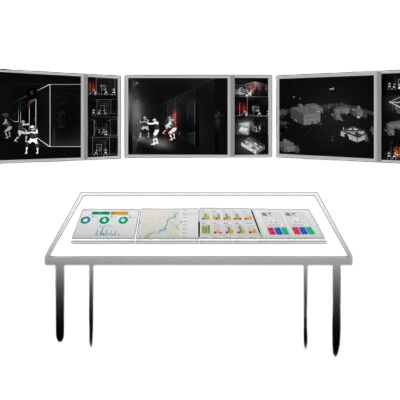
Central Control Station
Central hub for scenario management, video recording, tracking, and training analytics—including KPI reports. Located in or near the training building for quick exercise start/stop and simplified reporting.

Key Parameters
Complex Type:
Modular CQB training with building + optional outdoor zone.
Operating Modes:
Positioning, video recording, hit detection, event logging, KPI reports.
Fighter Capacity:
Base—up to 16; expandable per project.
Area:
Minimal effective (single-story): ~200 m²
Recommended (two-story, complex missions): ~400 m²
